 RFID4U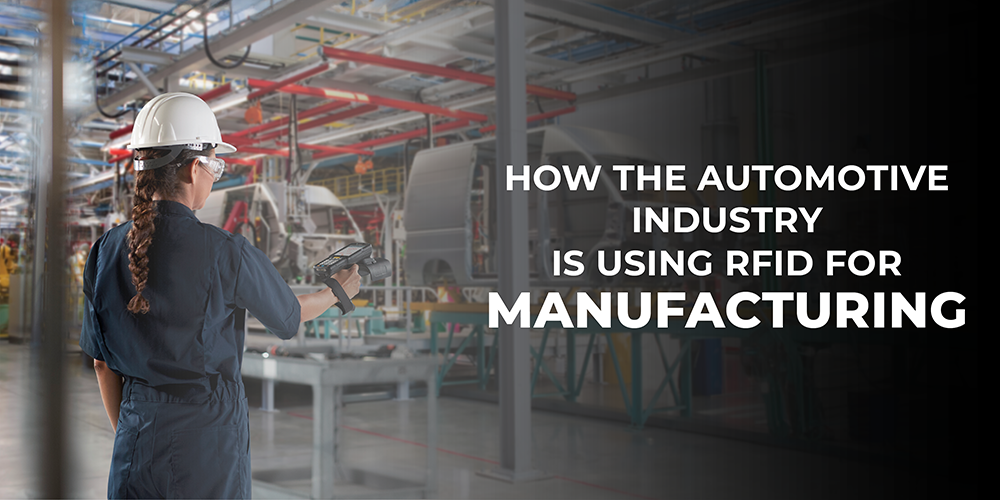
Introduction
Automotive manufacturing is one of the most complex and fast-moving production environments in the world. Thousands of components, just-in-time inventory models, strict quality requirements, and global supply chains all need to operate in perfect sync.
To manage this complexity, automotive manufacturers are increasingly adopting RFID (Radio Frequency Identification) technology to improve visibility, traceability, and operational efficiency across the factory floor and supply chain.
In this article, we’ll explore how RFID is used in automotive manufacturing, key applications across production and logistics, and the business benefits RFID delivers to manufacturers.
What Is RFID and How It Works in Automotive Manufacturing
RFID is a wireless identification technology that uses radio waves to automatically identify and track objects. In automotive manufacturing, an RFID system typically includes:
- RFID tags attached to parts, tools, containers, or vehicles.
- RFID readers and antennas installed at workstations, conveyors, dock doors, or yard locations.
- RFID software that captures, stores, and analyzes data in real time.
Unlike barcode systems, RFID does not require line-of-sight and can read multiple items simultaneously—making it well suited for high-speed, high-volume manufacturing environments.
Why Automotive Manufacturers Are Using RFID
Traditional tracking methods struggle to keep pace with modern automotive operations. Common challenges include:
- Limited visibility into work-in-progress (WIP)
- Manual errors in parts identification
- Inventory inaccuracies and line stoppages
- Incomplete traceability for quality and compliance
RFID addresses these challenges by automating data capture and delivering accurate, real-time insights across manufacturing and logistics processes.
Key RFID Applications in Automotive Manufacturing
1. Parts and Components Tracking
Automotive manufacturers manage thousands of components per vehicle, often sourced from multiple suppliers. RFID enables real-time tracking of parts from receiving and storage through assembly and shipment.
Benefits include:
- Improved inventory accuracy
- Reduced picking and kitting errors
- Faster root-cause analysis for quality issues
- Better supplier and production coordination
2. Work-In-Progress (WIP) Tracking
Maintaining visibility into WIP is critical for meeting production schedules and minimizing downtime. By tagging vehicle bodies, subassemblies, or carriers, RFID allows manufacturers to:
- Track each unit’s progress through the production line
- Identify bottlenecks and delays in real time
- Ensure correct process sequencing
This level of visibility helps improve throughput and overall equipment effectiveness (OEE).
3. Quality Control and Traceability
Quality and compliance are top priorities in the automotive industry. Manufacturers must be able to trace every component used in a vehicle. RFID creates a digital record of:
- Which parts were installed
- When and where installation occurred
- Which processes were completed
This supports faster recalls, regulatory compliance, and improved warranty and defect analysis.
4. Returnable Transport Items (RTIs) and Container Tracking
Reusable containers, racks, and pallets are critical assets in automotive supply chains—and frequently lost or misplaced. RFID tracking helps manufacturers:
- Reduce RTI loss
- Improve container utilization
- Ensure availability at the right locations
This leads to lower replacement costs and smoother logistics operations.
5. Tool and Equipment Tracking
Missing or unavailable tools can cause costly production delays. With RFID, manufacturers can:
- Track tool location and usage
- Monitor calibration and maintenance schedules
- Prevent unauthorized tool movement
This improves reliability, safety, and workforce productivity.
6. Finished Vehicle Tracking and Yard Management
RFID is also used beyond the assembly line to track finished vehicles in yards, storage areas, and distribution centers. This enables:
- Faster vehicle location
- Improved shipping accuracy
- Better coordination with logistics partners
Benefits of RFID in Automotive Manufacturing
Across these applications, RFID delivers measurable value:
- Improved production efficiency
- Real-time visibility into inventory and WIP
- Reduced errors and rework
- Enhanced quality and compliance
- Lower labor and operational costs
RFID transforms manufacturing data from manual and reactive into automated and actionable.
RFID vs. Barcode Tracking in Automotive Manufacturing
| Feature | RFID | Barcode |
|---|---|---|
| Line of Sight Required | No | Yes |
| Bulk Scanning | Yes | No |
| Automation Level | High | Low |
| Read Speed | Very Fast | Slower |
| Environmental Durability | High (with proper tags) | Limited |
For complex automotive manufacturing environments, RFID offers clear advantages over traditional barcode systems.
Implementation Considerations and Best Practices
Successful RFID deployment requires careful planning. Best practices include:
- Conducting RF site assessments.
- Selecting the right tags (on-metal, high-temperature, rugged).
- Integrating RFID data with MES, ERP, and quality systems.
- Piloting before full-scale rollout.
Partnering with an experienced RFID solution provider helps reduce risk and accelerate ROI.
Frequently Asked Questions About RFID in Automotive Manufacturing
How does RFID improve automotive manufacturing efficiency?
RFID automates tracking, reduces manual effort, and provides real-time visibility across production and logistics.
Is RFID suitable for harsh automotive environments?
Yes. Industrial RFID tags are designed to withstand metal surfaces, heat, vibration, and chemicals.
Can RFID integrate with existing manufacturing systems?
Modern RFID platforms integrate seamlessly with MES, ERP, WMS, and analytics systems.
RFID as a Strategic Advantage for Automotive Manufacturers
As automotive manufacturing becomes more connected and data-driven, RFID is no longer a “nice to have”—it’s a strategic enabler.
By improving visibility, traceability, and operational control, RFID helps manufacturers reduce costs, improve quality, and remain competitive in an evolving industry.
Interested in RFID for your automotive manufacturing operation?
Request a demo or speak with an RFID expert to explore how RFID can be tailored to your production environment. Contact Us Today.