 RFID4U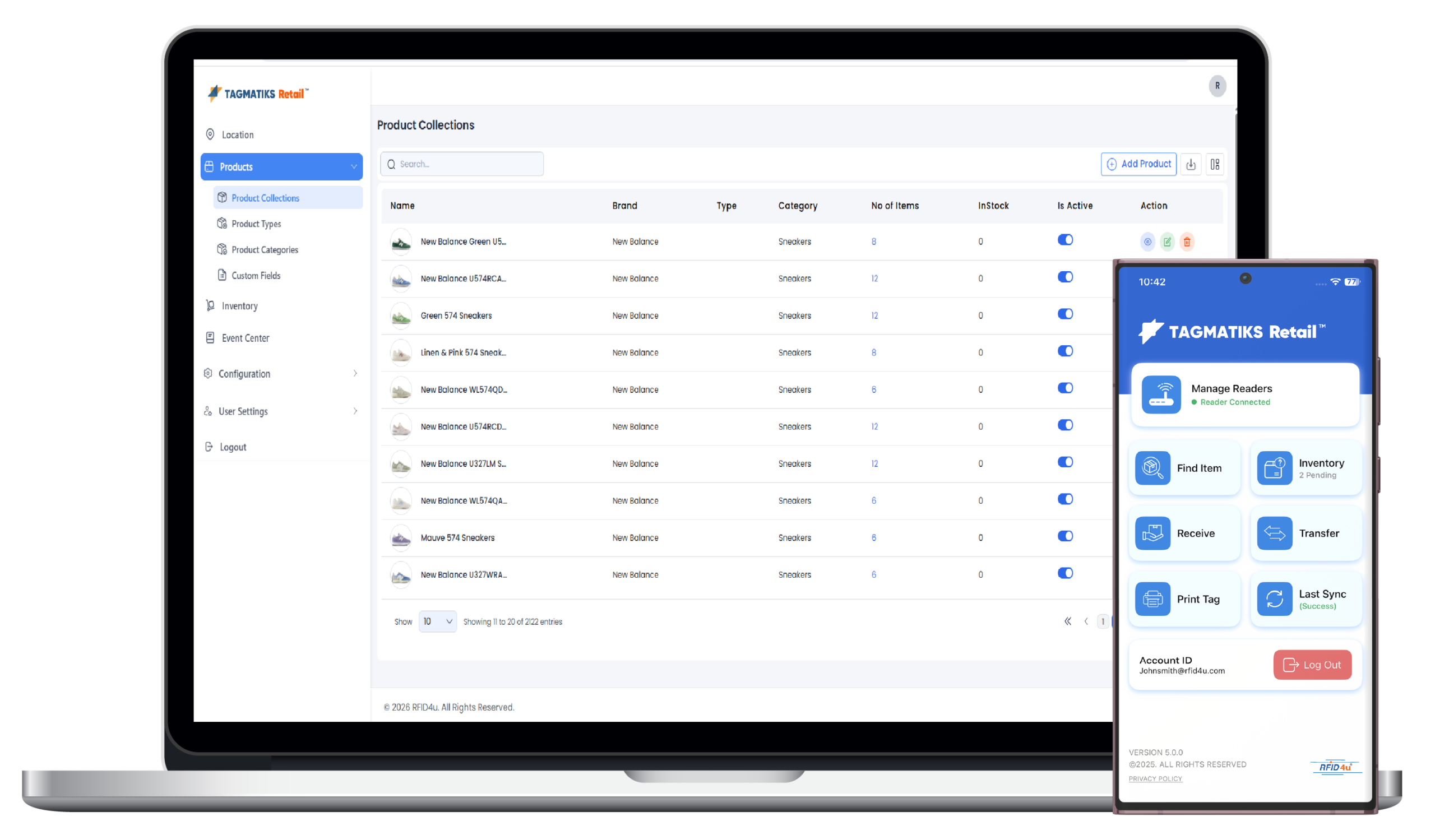



Features & Benefits
Why TagMatiks Retail is Your Solution to Managing Your Inventory Better with RFID
What Is RFID in Retail?
RFID (Radio Frequency Identification) uses smart tags and readers to automatically track inventory without line-of-sight scanning. Unlike barcodes, RFID enables bulk reading, real-time updates, and precise item-level tracking across stores, warehouses, and the supply chain.
Retailers use RFID to:
- Improve inventory accuracy
- Enable faster cycle counts
- Reduce theft and shrink
- Support omnichannel fulfillment (BOPIS, ship-from-store)
Easy Installation & Setup
Available as an out of the box solution, TagMatiks Retail is ready to use. With built in support including knowledge articles, videos, quick start guides and more, you'll be up and running with ease.
Quick RFID Printing Workflow
TagMatiks Retail includes an off the shelf workflow to print and encode RFID labels for in store / warehouse labeling. With built in serialization, the solution makes it easy to keep your inventory RFID tagged.
Robust Mobile Apps & Cloud Portal
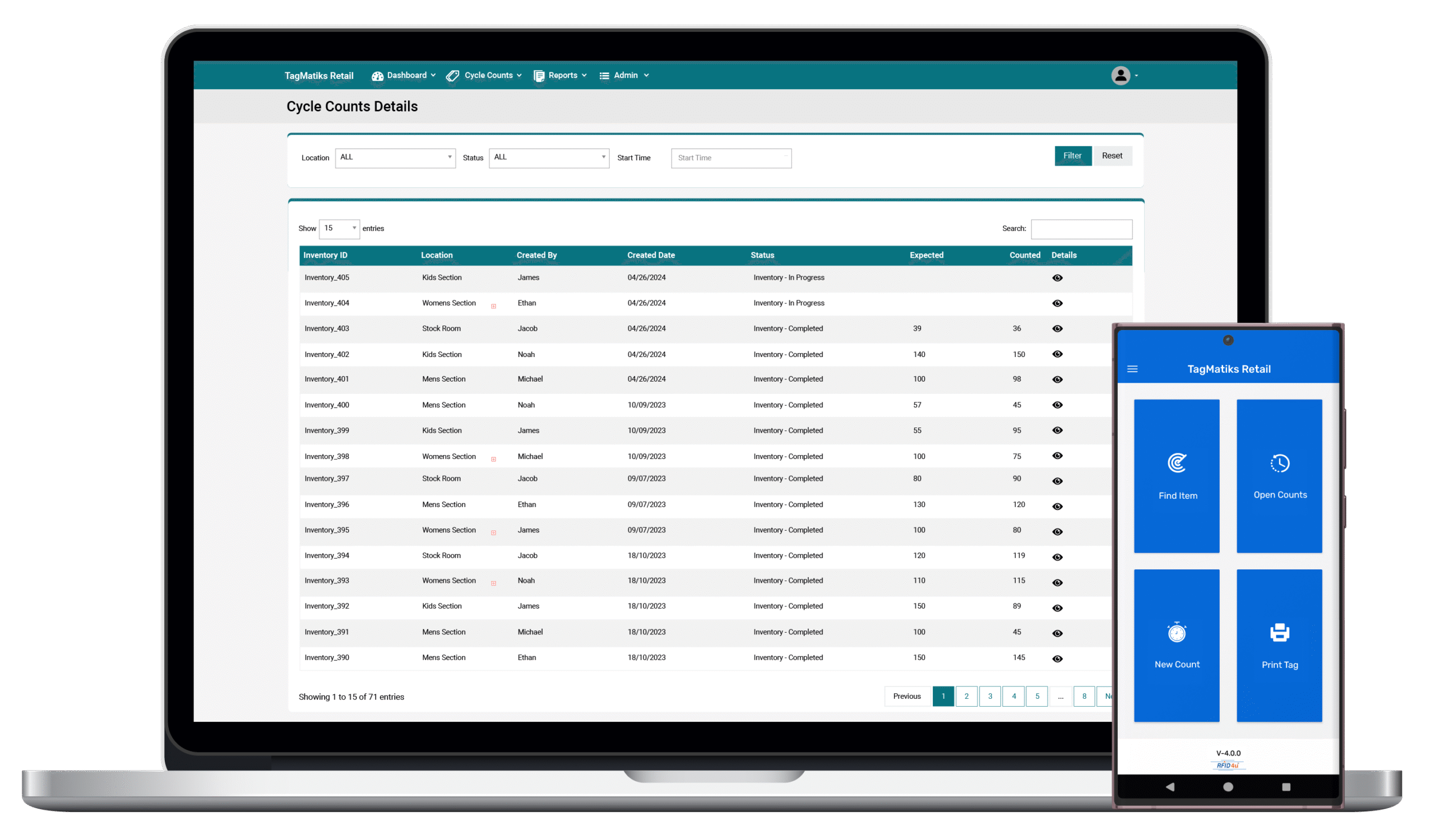
The solution includes mobile applications on both iOS and Android for ease of deployment that connect directly with a cloud portal to analyze data. The mobile apps make it easy to collect RFID data on the go while the cloud portal makes it easy to visualize data that is collected and manage the solution.
Substantial Out of the Box & Custom Reports
With ready to go reports such as cycle count history, inventory item history, location inventory reports, and more, TagMatiks Retail allows you to leverage RFID collected data. Download and share reports in a variety of formats and even create custom reports to further leverage the data that is collected.
Inventory Reconciliation
After completing the cycle counts, TagMatiks Retail has a unique yet powerful feature for simple reconciliation to under- stand variances found during the counting process.
Inventory Locating Feature
Use RFID handhelds to pinpoint inventory to quickly identify products that may be misplaced or are not able to be found.
RFID Based Cycle Counting
Use RFID labels to cycle count inventory and quickly identify matched, missing and misplaced products.
In Built Analytics Powered By RFID and AI
As you collect RFID powered data, use AI and RFID data to review analytics about your operations and inventory.
Powerful APIs for Simple Integration To Other Systems
Easy integration of RFID data to other systems such as POS, WMS, or ERP applications using the out of the box APIs.
Extensive RFID Device Support
TagMatiks Retail supports exten- sive RFID device options for ease of adoption and flexibility of rollouts.
Why Retailers Choose RFID Inventory Management
Traditional barcode systems can’t keep up with today’s retail demands. RFID inventory management delivers measurable ROI through automation and visibility.
Key benefits include
- Up to 99% inventory accuracy
- 90% faster inventory counts
- Improved on-shelf availability
- Reduced shrink and loss
- Faster replenishment and fulfillment

TagMatiks Retail is designed for retailers including:
-
General Merchandise Retailers
-
Apparel and Soft Goods
-
Luxury Goods
-
Sporting Goods
-
Jewelry
-
Bridal
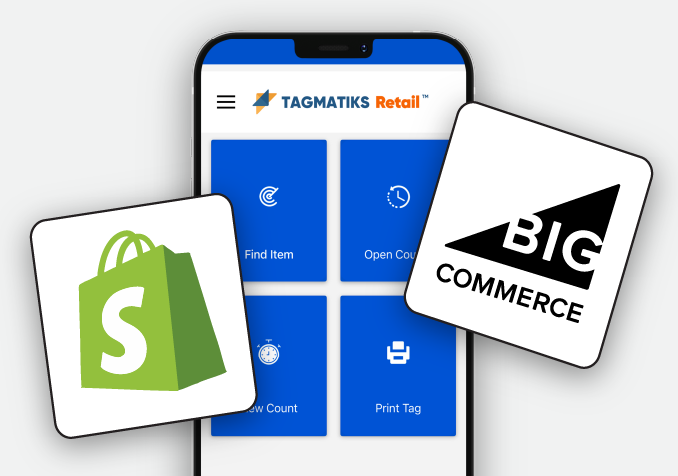
TagMatiks Retail RFID Software integrated with Shopify and BigCommerce
RFID retail software seamlessly integrates with Shopify and BigCommerce, enabling real-time inventory tracking, automated stock updates, and enhanced loss prevention. Streamline operations with fast, accurate scanning, reducing manual errors and improving stock visibility. Boost efficiency, optimize replenishment, and enhance the shopping experience with a powerful, cloud-based RFID solution.
Retail RFID Case Study: Improving Inventory Accuracy with TagMatiks
Workflow Automation using RFID & Mobility technology with the TagMatiks platform
Why Use TagMatiks Retail for RFID in Your Retail Store

Inventory Excellence
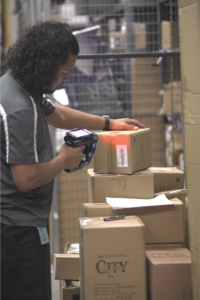
Use RFID handhelds to cycle count inventory. Using RFID handhelds drastically reduces time that is required to count inventory and improves inventory accuracy.

Configurability
TagMatiks Retail includes a variety of configurations to make sure the solution is adoptable for every retailer.

Enterprise Solution
Packed with extensive enterprise features including being designed for the cloud, TagMatiks Retail makes it easy to manage inventory across a large quantity of retail stores.

Serialization Management
TagMatiks Retail manages your serialization to ensure that your RFID labels are encoded properly and that duplicates don't occur. We even have a complementary solution called TagMatiks Print Manager to make it easy for your suppliers to label your products for you with RFID labels.
Explore TagMatiks Retail
TagMatiks Retail is RFID retail software that elevates inventory management/tracking, reduces shrinkage, and improves visibility
Frequently Asked Questions
What is RFID technology?
RFID (Radio Frequency Identification) is a wireless technology used to automatically identify and track inventory using radio waves.
In simple terms, RFID is like a smarter, faster version of a barcode system. Instead of scanning items one at a time, RFID allows retailers to scan hundreds of items at once — without needing a direct line of sight.
Here’s how it works: each product has a small RFID tag attached to it. An RFID reader sends out a radio signal, and the tag responds with its unique identification information. The system then instantly records what the item is and where it is located.
In retail stores, RFID technology improves inventory accuracy, speeds up cycle counts, reduces shrinkage, and helps ensure shelves are always stocked. It gives retailers real-time visibility into their inventory across stores and warehouses.
How does RFID work in retail?
This helps retailers improve inventory accuracy, reduce shrinkage, and maintain real-time visibility of stock across stores and warehouses.
What are the primary benefits of TagMatiks Retail?
It also helps improve store operations by reducing labor time spent on stock checks, enabling real-time inventory insights, and supporting better decision-making for replenishment and merchandising.
What are the benefits of using RFID in retail?
With better visibility into stock levels, retailers can reduce shrinkage, prevent out-of-stocks, improve replenishment, and support omnichannel services like buy online, pick up in store (BOPIS). The result is improved operational efficiency, increased sales, and a better customer experience.
Does TagMatiks Retail integrate with e-commerce platforms?
Can RFID improve the customer shopping experience?
This leads to faster service, better product availability, and a smoother, more reliable shopping experience both in-store and online.
How can RFID reduce out-of-stock situations?
With better inventory accuracy, retailers can replenish shelves faster, identify missing items sooner, and prevent stock discrepancies — helping ensure products are available when customers are ready to buy.
Can RFID help with inventory audits?
This improves inventory accuracy, reduces human error, and provides reliable data for financial reporting and compliance.
How do retailers use RFID to streamline the supply chain?
This improves inventory accuracy, speeds up distribution, minimizes shipping errors, and ensures the right products are in the right place at the right time — creating a more efficient and responsive retail supply chain.
How can RFID reduce inventory shrinkage?
This increased transparency discourages theft, improves accountability, and helps identify loss patterns — allowing retailers to take corrective action before shrinkage impacts profits.
Can RFID improve the customer shopping experience?
With better inventory accuracy, store associates can quickly check availability, locate items, and support services like buy online, pick up in store (BOPIS). This leads to fewer out-of-stocks, faster service, and a smoother, more reliable shopping experience.
What types of RFID tags are used in retail?
What are the costs associated with implementing RFID in retail?
- RFID labels – the physical tags attached to products (cost varies by volume and type)
- Hardware – RFID readers, antennas, and fixed or handheld devices
- Software & integration – systems to collect, manage, and sync RFID data with POS, e-commerce, and inventory platforms
- Installation & setup – configuring readers, networks, and systems
- Training & support – educating staff and ongoing technical support
While there is an upfront investment, most retailers see a return through improved inventory accuracy, reduced labor costs, lower shrinkage, and increased sales.
How does RFID compare to barcodes in retail?
Because of this, RFID provides higher inventory accuracy, faster cycle counts, and real-time visibility. While barcodes are lower cost upfront, RFID delivers greater efficiency, reduced shrinkage, and better support for omnichannel retail operations.